


Services
Earthquake engineering
Explore Our Services
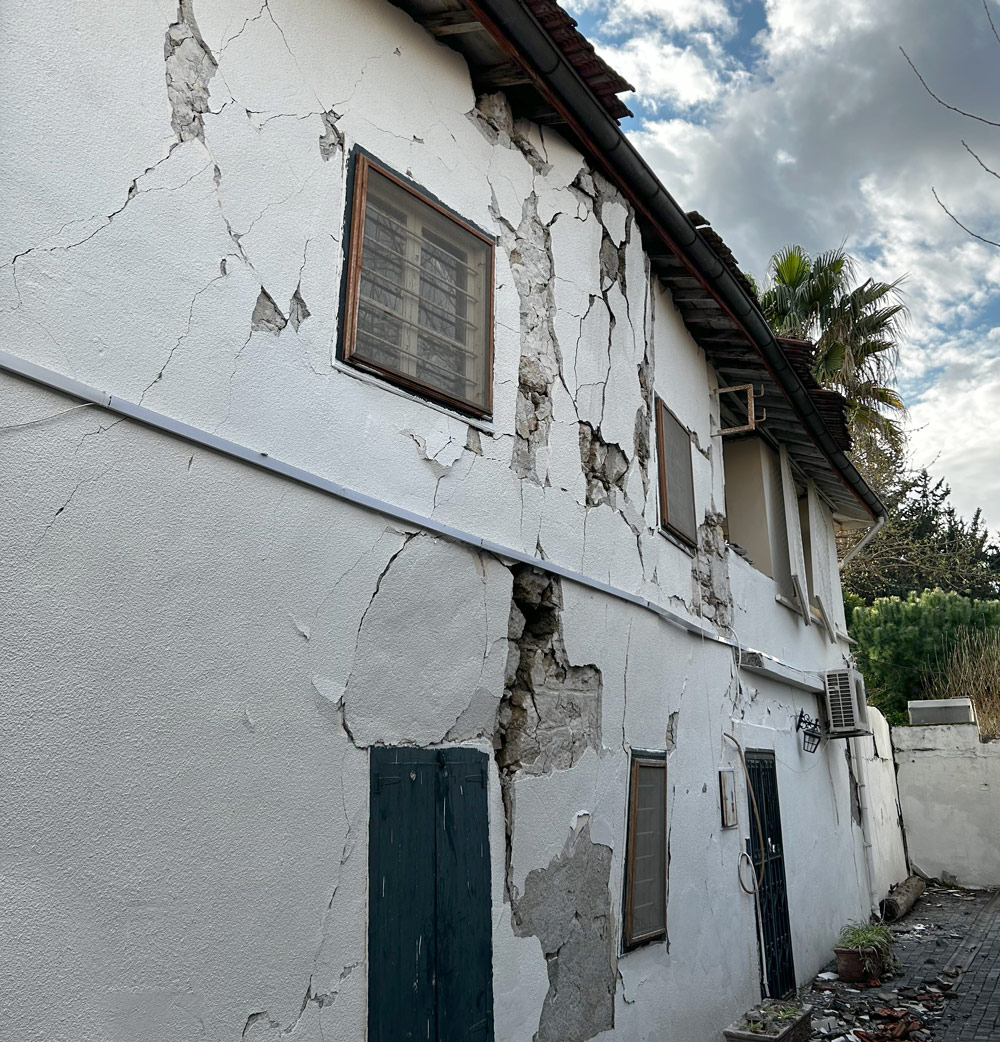
Earthquakes are complex natural phenomena with the potential to cause severe damage. A key aspect of seismic safety is the distinction between the design of new structures and the assessment of existing buildings, particularly with regard to the analysis methods used.
The seismic design of new structures is typically based on linear analysis methods. These methods rely on simplified and often conservative assumptions about structural behaviour and provide an efficient and code-compliant approach to ensure seismic safety in new construction.
The assessment of existing structures, however, often requires nonlinear analysis methods to achieve a more realistic representation of seismic behaviour. This is particularly important because overly conservative assessments can lead to unnecessary and costly retrofit measures. Nonlinear methods allow for a more detailed evaluation, helping to ensure both safety and cost-effectiveness when planning interventions.
LEO Consulting specialises in the seismic assessment of existing structures and combines engineering practice, research and continuing education. Dr Safak Arslantürkoglu is principal lecturer and programme coordinator of the CAS ETH in Seismic Evaluation and Retrofitting at ETH Zurich. This close connection between research, standards development and engineering practice allows the latest insights to be directly incorporated into our projects.
The importance of seismic safety for existing buildings was also highlighted to a wider audience in the SRF programme “einstein”. We had the opportunity to contribute to this feature and provide insights into the assessment of the seismic safety of existing buildings. The video can be found below.
Depending on the specific project, a broad range of methods may be applied. In particular, the use of nonlinear and probabilistic approaches goes beyond conventional standard assessment procedures and enables a more differentiated evaluation of existing structures. Our services include, among others:
- • Nonlinear static analyses (Pushover)
- • Nonlinear dynamic analyses (Time history) including Incremental Dynamic Analysis (IDA), Multiple Stripes Analysis (MSA), and Cloud Analysis
- • Deterministic and probabilistic approaches for seismic risk assessment
- • Assessment of local failure mechanisms, particularly the out-of-plane behaviour of masonry walls
- • Evaluation of earthquake safety using the compliance factor according to SIA 269/8 to express conformity with SIA regulations
- • Assessment of the proportionality of measures according to SIA 269/8
- • Development of retrofit strategies and intervention measures where required
Explore Our Services